
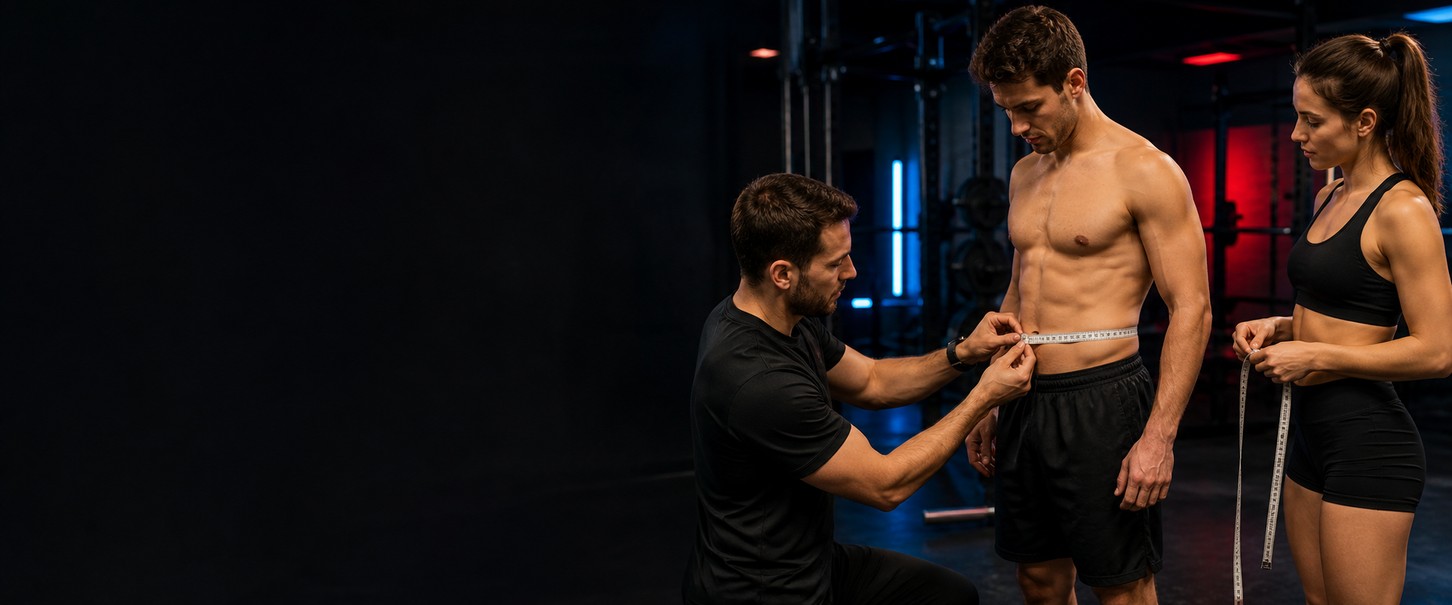
A useful estimate needs repeatable measurements
Calculate Your Estimated Body Fat Percentage
Choose the appropriate option, measure the required body sites with a non-stretch tape, and enter the values below. The result uses the established Hodgdon-Beckett circumference equations and should be treated as an estimate, not a diagnosis.
Circumference Body Fat Calculator
Enter Your Measurements
Measure over bare skin or thin clothing without compressing the tissue. Take each circumference at the end of a normal, relaxed exhalation.
Your circumference estimate
Body Fat Results
Practical Uncertainty Range
Estimate plus or minus 4 percentage pointsEstimated Fat Mass
Calculated from the optional body weightEstimated Fat-Free Mass
Body weight minus estimated fat massMeasurements Used
This result is an estimate, not a diagnosis. Individual error can exceed the displayed range, so use the same method and conditions to judge trends rather than treating one result as exact.
Landmarks matter more than pulling the tape tighter
How to Take Standardized Circumference Measurements
Use a flexible, non-stretch tape. Keep it level and snug without compressing the skin. Take two or three readings at each site and use their average when repeated readings differ.
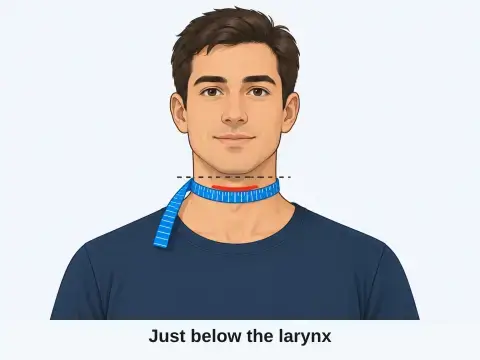
Neck: Men and Women
Stand upright, look straight ahead, and relax the shoulders. Place the tape just below the larynx, keeping it level or slightly lower at the front.
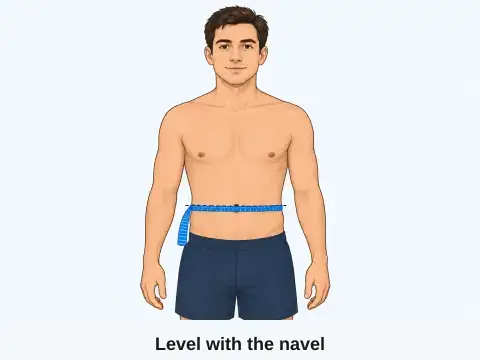
Men: Abdomen at the Navel
Stand naturally with the abdomen relaxed. Keep the tape horizontal through the navel and record the measurement after a normal exhalation.
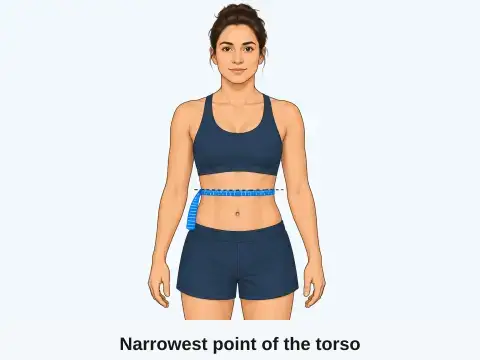
Women: Natural Waist
Measure the narrowest point of the torso, normally between the lowest rib and the top of the hip bone. Keep the tape horizontal and avoid pulling in the abdomen.
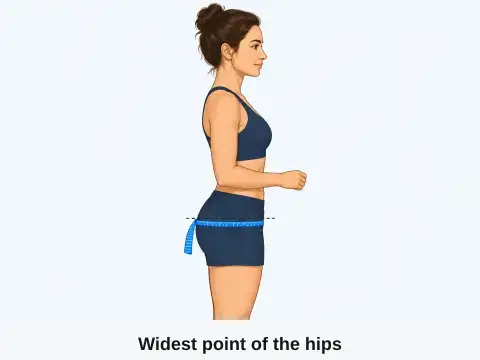
Women: Hips
Measure around the widest part of the buttocks with feet together. Check from the side that the tape stays level all the way around.
Consistency makes a trend interpretable
Track Body Composition Progress Consistently
A small change can come from tape placement, hydration, food intake, or normal day-to-day variation. Standardize the process before deciding that body composition has changed.
Repeat the Conditions
Use the same tape, measurer, time of day, and relationship to meals and training. Morning measurements under similar conditions are often easiest to repeat.
Average the Readings
Take two or three measurements at each landmark. If they disagree, reset the tape and repeat instead of selecting the preferred number.
Follow the Trend
Compare results every two to four weeks rather than every day. Combine the trend with body weight, training performance, and consistent progress photos if useful. For worked examples of changed conditions, different methods, and longer records, use the guide to interpreting changing body-fat readings before treating a new percentage as fat gain or muscle loss.
Every method estimates body composition differently
Tape Measurements, Skinfolds, Bioimpedance, and DEXA Compared
No field method produces a perfectly exact body-fat percentage. Choose a method you can repeat well, understand its limitations, and avoid comparing small changes from different methods as though they were interchangeable.
| Method | How It Works | Strengths | Important Limits |
|---|---|---|---|
| Tape Circumferences | Uses standardized body measurements in a prediction equation. | Cheap, quick, accessible, and repeatable at home. | Landmark and tape-placement errors affect the estimate; muscular or unusual body shapes may not fit the equation well. |
| Skinfolds | Measures selected skinfold thicknesses with calipers and applies a prediction equation. | Can track change well when the same trained measurer repeats the same protocol. | Requires skill, consistent sites, suitable calipers, and an appropriate population equation. |
| Bioimpedance | Estimates body composition from the resistance of body tissues to a small electrical current. | Fast and convenient; home scales make frequent readings easy. | Hydration, food, recent exercise, temperature, and the device algorithm can shift results. |
| DEXA | Uses low-dose X-rays to estimate bone mineral, fat mass, and lean soft tissue by region. | Provides regional and whole-body estimates with more detail than home methods. | Costs more, requires specialist equipment, and results can still vary with the machine, software, hydration, and testing conditions. |
Use the estimate in context
Connect Body Composition to Nutrition and Training
Body-fat estimates are most useful when they support practical decisions rather than becoming a score to chase.
Nutrition Guide
Set calories, protein, carbohydrates, fats, meal timing, and hydration around a realistic goal.
Open the Nutrition GuideFull Body Workout Plan
Build a balanced resistance-training routine that can support muscle retention and progress.
View the Full Body PlanWorkout Tracker
Record sessions and compare training performance alongside longer-term body composition trends.
Open the Workout TrackerFFMI Calculator
Use estimated body fat with height and weight to calculate fat-free mass, FFMI, normalized FFMI, and a sensitivity range.
Open the FFMI CalculatorMacro Calculator
Turn an existing calorie target into flexible protein, fat, and carbohydrate ranges for your goal and dietary preference.
Open the Macro Calculator